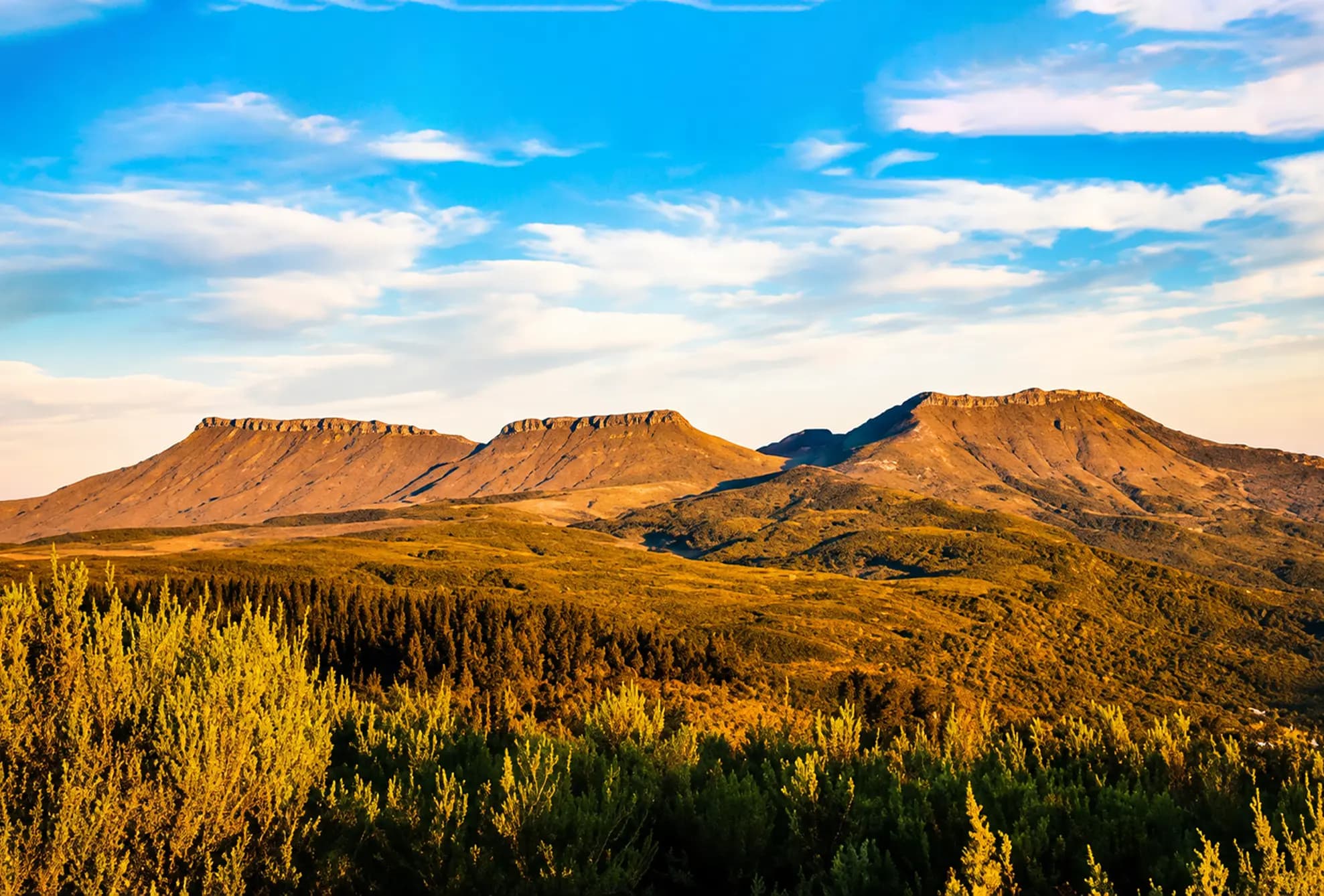
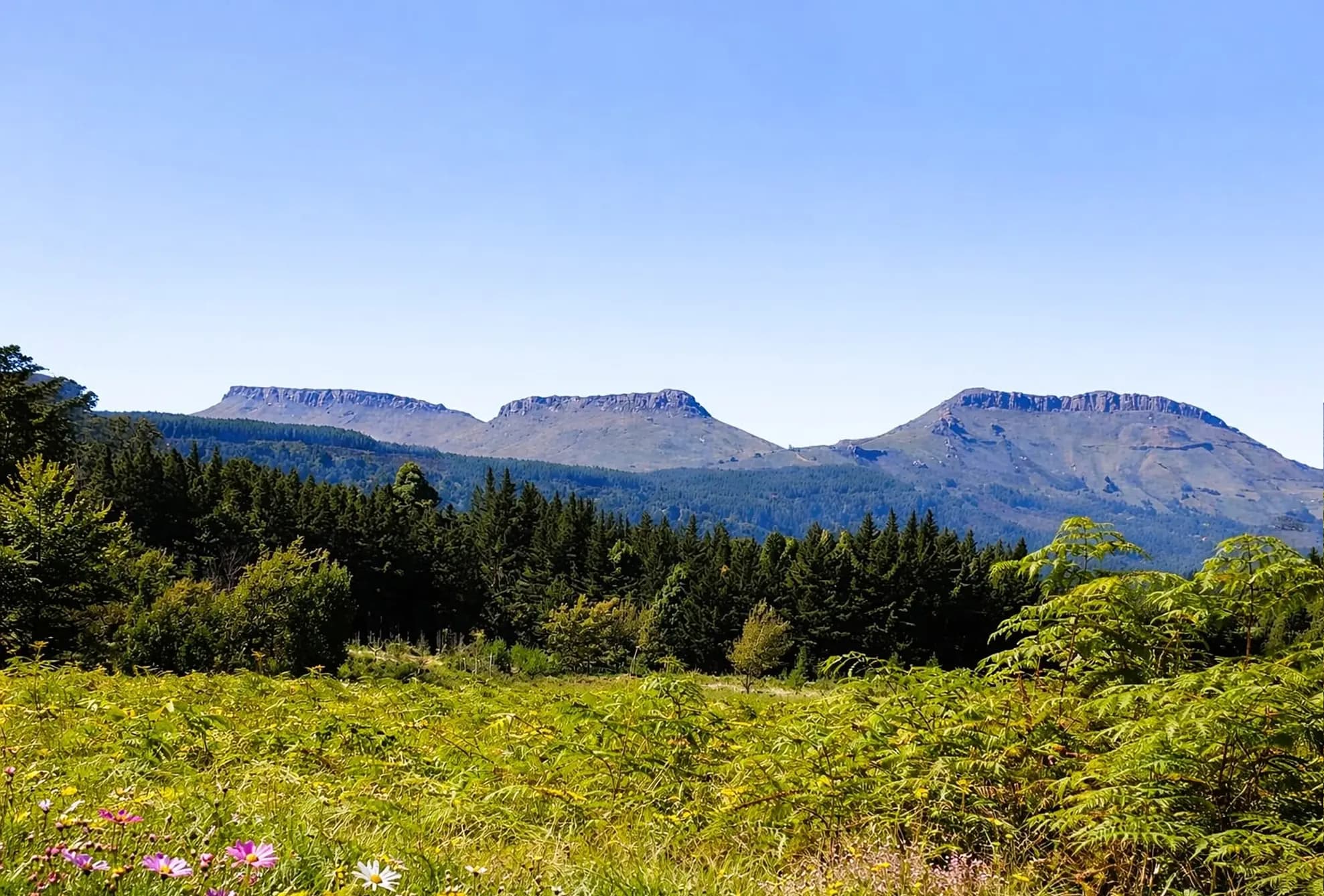
Warm evening light on the Hogsback mountain ridges

A little difficult to describe.

Our place. Our people.
Our story.

Somewhere between an ancient forest and a garden gate,
you’ll find the wonderfully unusual village of Hogsback.

Get to know Hogsback
Amathole Mountains · Eastern Cape · South Africa

About Hogsback

The mountain is
only half the story.

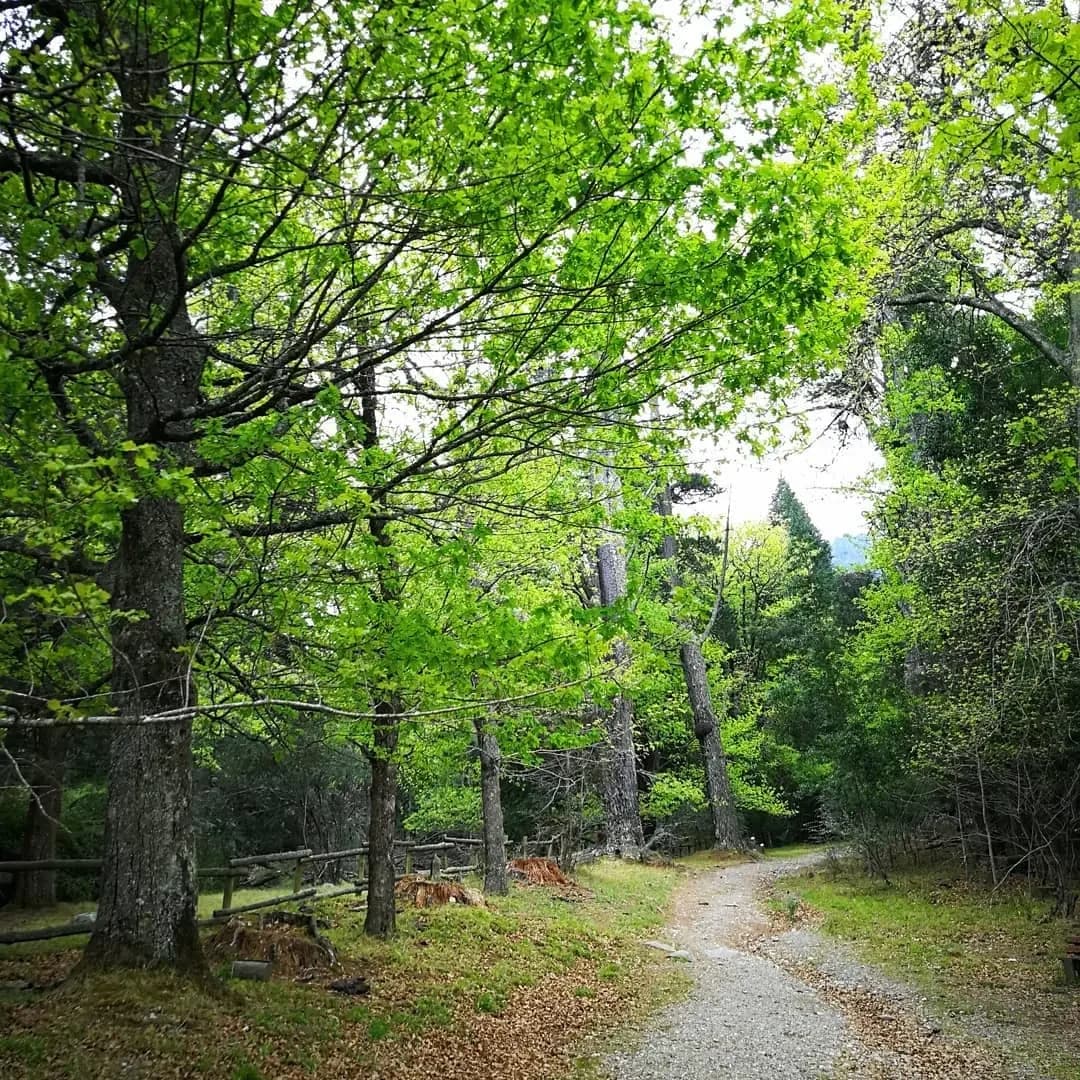
Mist arrives without much warning. Water runs through the forest. Old trees lean over quiet lanes, and spring gardens spill colour across the mountain.

High above the Tyhume Valley, Hogsback has drawn people with all sorts of ideas about how to live. Artists and academics. Gardeners and craftspeople. Farmers, families and people who came for a weekend and stayed.

To understand this place, you have to meet its landscape and the people who keep making a village within it.

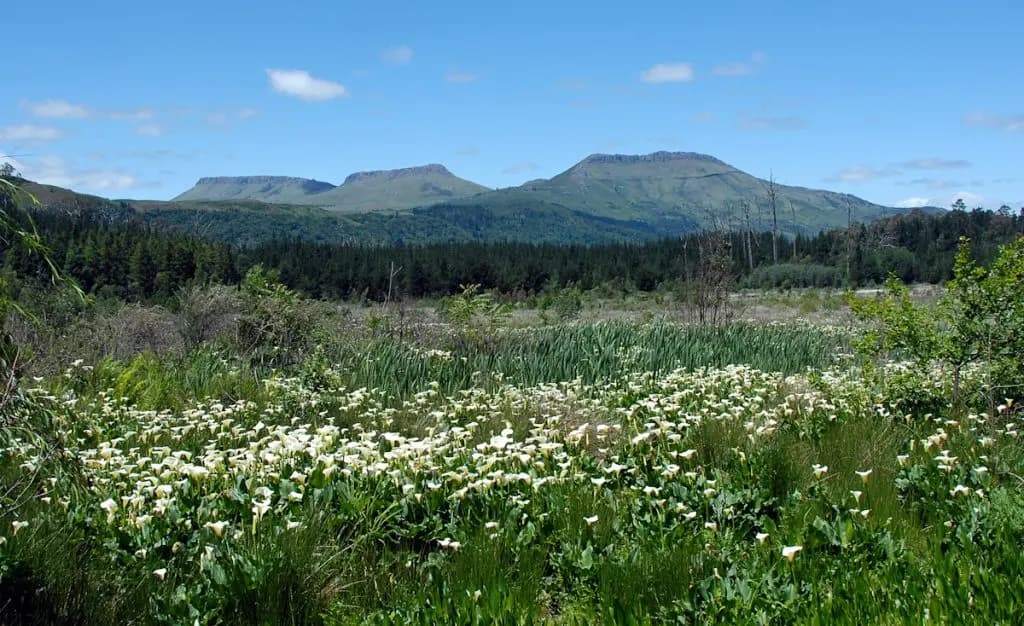
White wildflowers beneath the Hogsback mountains
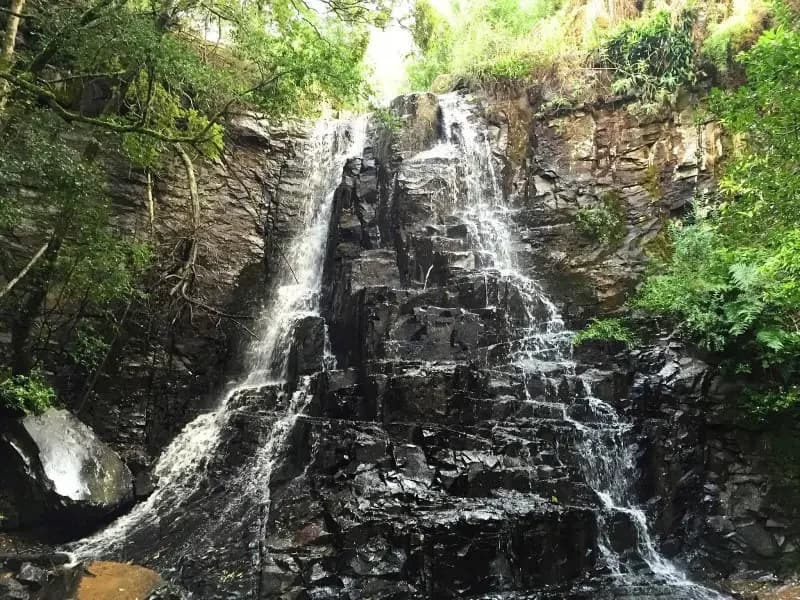
Water flowing down rock steps in the forest
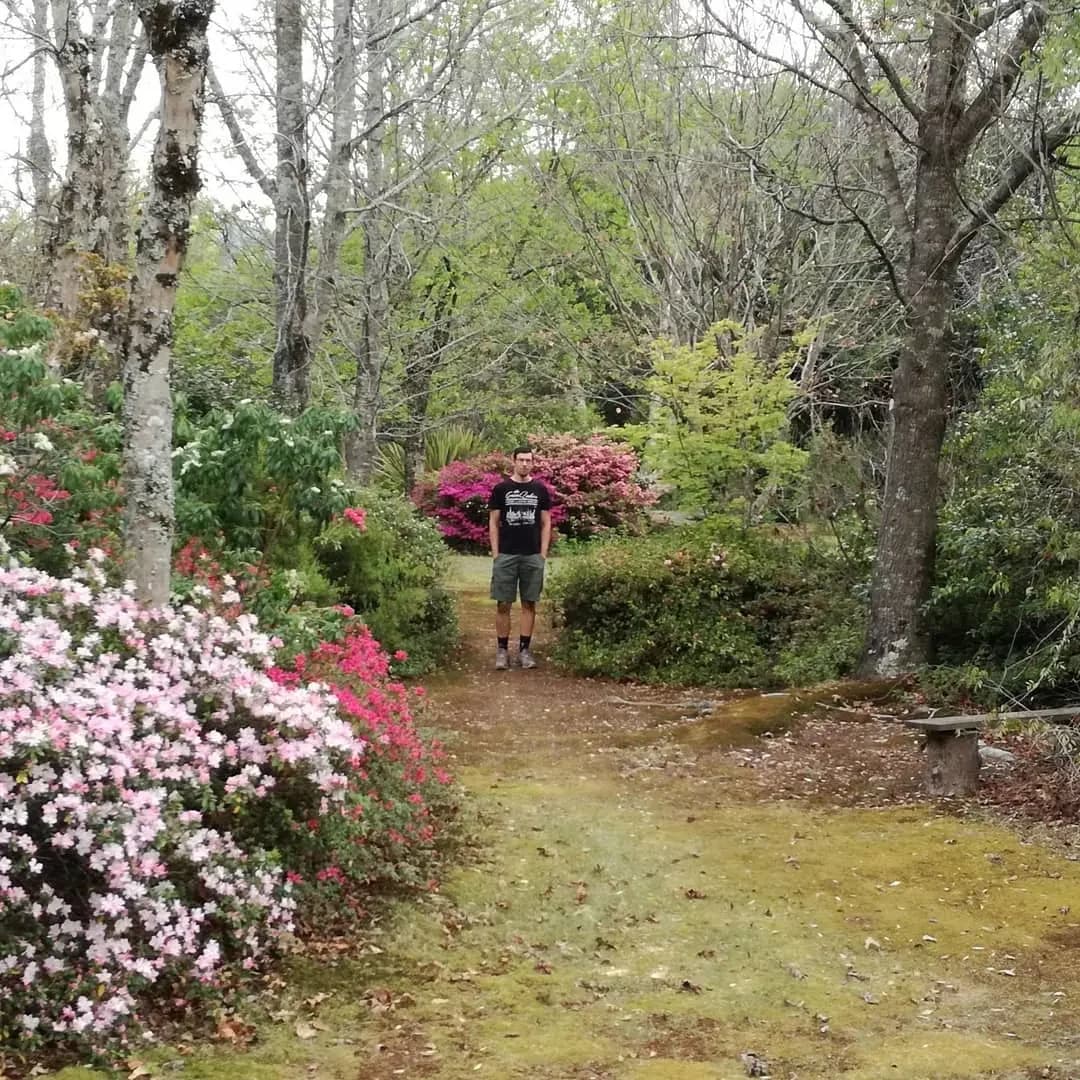
A garden path between flowering shrubs and tall trees at the Arboretum

The history of Hogsback

Long before the village.

The Hogsback ridges rising beyond open grassland and forest

A landscape with a longer memory

Before it was called Hogsback

The Amathole Mountains are deeply connected to Xhosa history. During the nineteenth-century frontier conflicts, their forests, valleys and rugged slopes offered strongholds and refuge as the Cape Colony expanded.

Older names and histories belong to this landscape, even where surviving accounts disagree about spelling or meaning. The story here begins well before a village appeared on a map.

Below the mountain, the Tyhume Valley is also home to Lovedale and the University of Fort Hare. Both have their own profound roles in South Africa’s history.
Historic drawing of the Hogsback mountain ridges
An early drawing of Hogsback’s distinctive ridges.

Forests & gardens

Wild at heart.
Grown with love.

An African mountain forest on one side of the gate. An exuberant country garden on the other.

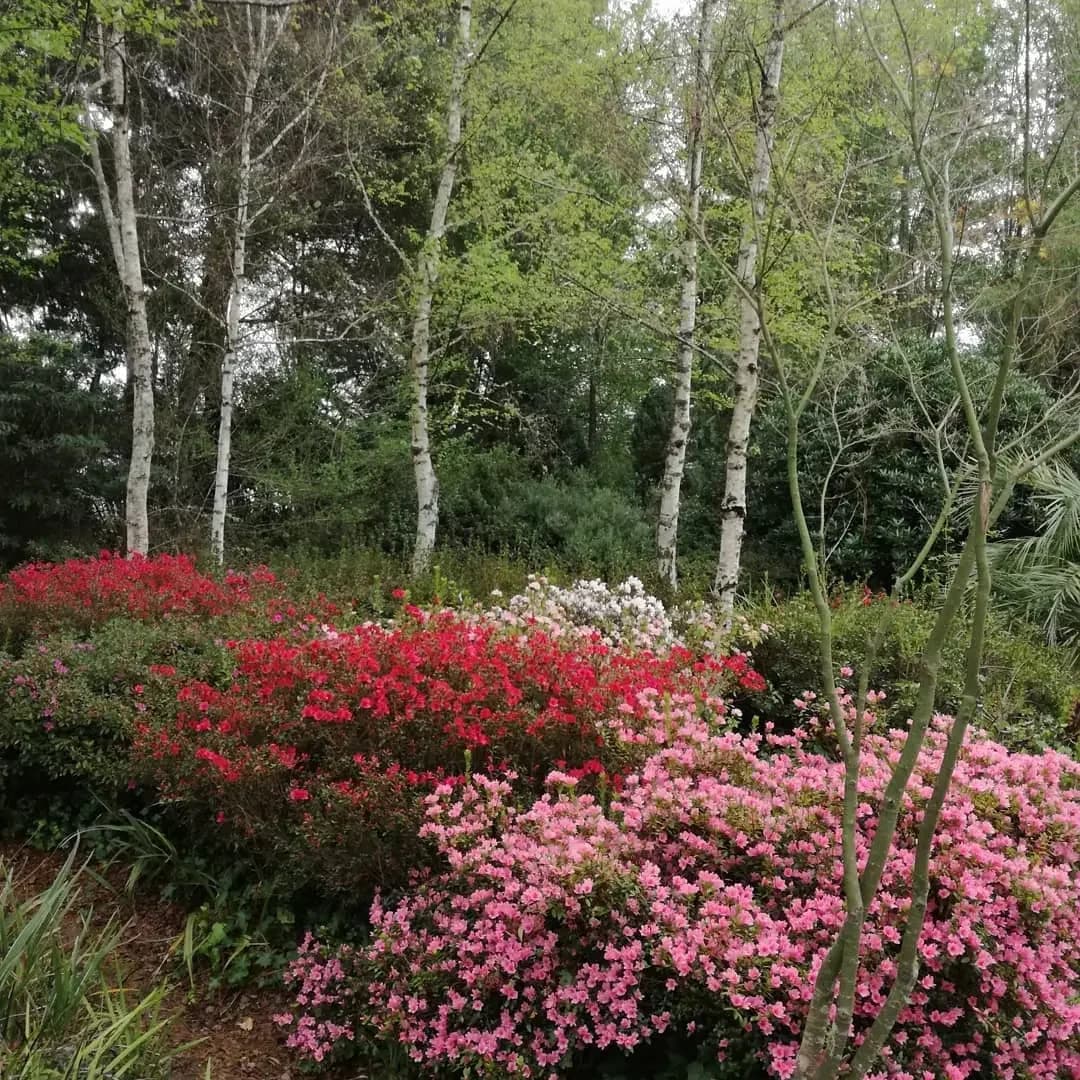
Red and pink flowers growing beneath tall trees in the Hogsback Arboretum
Spring colour in the Arboretum.

The hands that shaped the landscape

From orchards to azaleas

As farms took root on the plateau, Thomas Summerton established Cherrie Orchard. Apples, cherries, pears, peaches, nuts and berries grew with the help of an irrigation furrow carrying mountain water to his land.

Generations of gardeners followed. The rhododendrons, azaleas and flowering cherries visitors love today came from people planting, tending and sharing what would grow here.

And then there are the trees

Forestry developed in the 1880s, bringing experimental and ornamental planting. The Arboretum’s Californian redwoods stand alongside a much older story: the mountain’s indigenous forests of yellowwoods, Cape chestnuts and white stinkwoods.

Find forests, gardens & walks

A settlement becomes a village

A place to arrive.
A reason to stay.

First the farms. Then a hotel, a forest station and, eventually, a better road up the mountain.

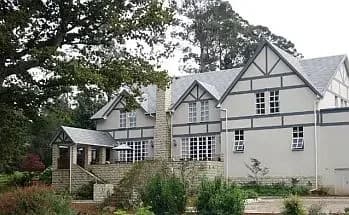
The Hogsback Inn buildings among established trees
The Hogsback Inn, part of the village’s long hospitality story.

The Hydro & the Hogsback Inn

A hotel with a stream for a bath

By the 1880s, a small hotel had been established here. It became the Hydro and later the Hogsback Inn. For the little settlement it was also a meeting place, shop, marketplace and post office.

An account from 1907 describes guests bathing in the stream. A mountain holiday has always called for a little sense of adventure.

Opening the way

The road that changed things

One account from 1919 describes only about six houses on the plateau. When the present Hogsback Pass opened in 1932, better access brought more visitors.

Farms were divided, holiday cottages appeared, and a scattered settlement gradually became a mountain retreat.

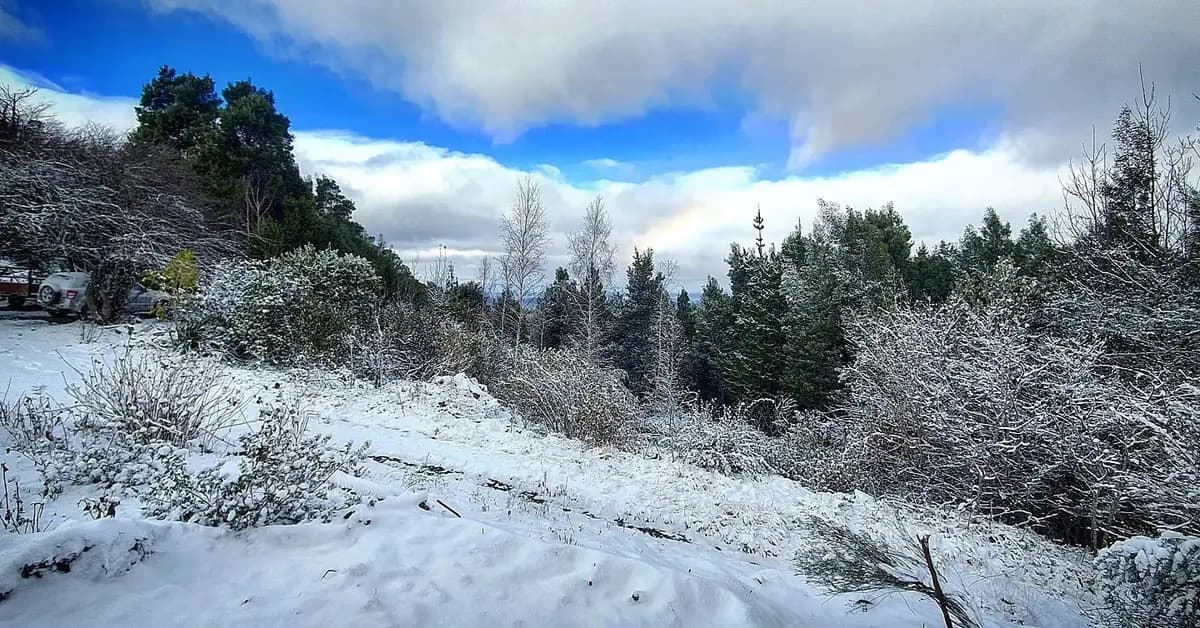
Snow covering the ground and trees in Hogsback

A book, a holiday, a beginning

The real Hobbiton story.

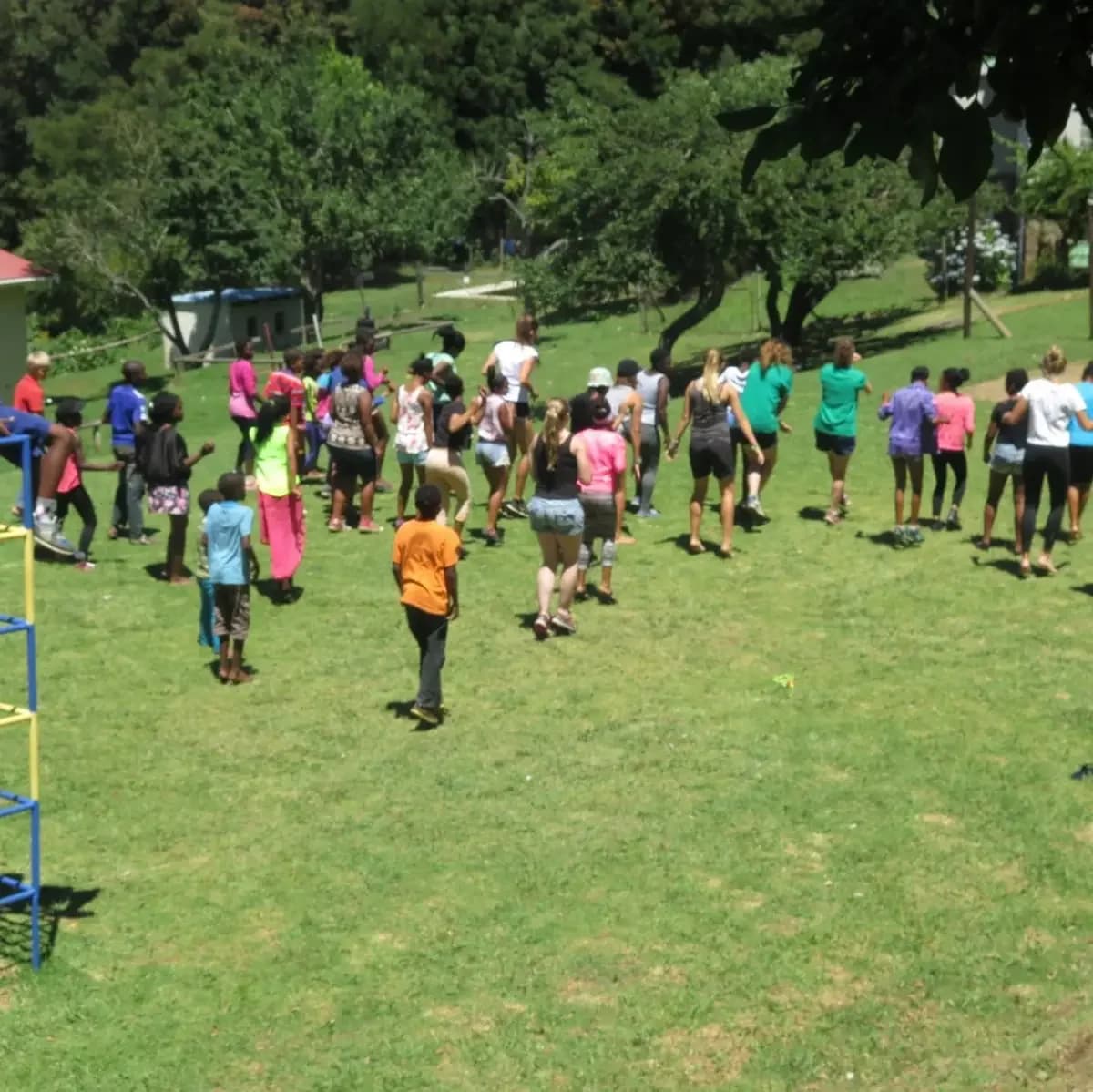
A group taking part in outdoor activities on the lawn at Hobbiton

Hobbiton-on-Hogsback · Since 1945

A little of its own Middle-earth

You’ll meet plenty of Tolkien references here. But there is no reliable evidence that Tolkien visited Hogsback or based Middle-earth on it.

The village’s real connection starts with Betty Chew. In September 1945, sixteen children affected by the war came to the Hydro for a holiday. During the project, The Hobbit was read to them.

That gathering became Hobbiton-on-Hogsback. The camp’s story is one of children, the outdoors and imagination. Its connection with the book is entirely its own.

The people who call it home

A village is something
you make together.

Hogsback has room for many ways of seeing the world. It also has a way of bringing people together when there’s work to do.

Road repairs, clearing vegetation, looking after trails and public spaces, organising events: much of village life is supported, funded or carried out by residents themselves.

We don’t always agree. But people with very different beliefs still find themselves working beside one another when the village needs them.

Artists, writers and academics have also found a home here. Anthropologist Monica Wilson lived and worked at Hunterstoun. Her story sits alongside countless quieter ones, of people who came to garden, build, raise a family or begin again.

“This is our village,
so we look after it.”
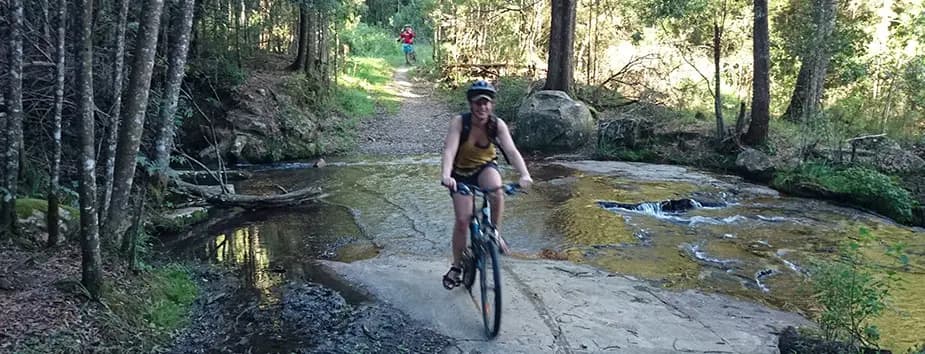
A cyclist crossing a stream on a shaded forest trail
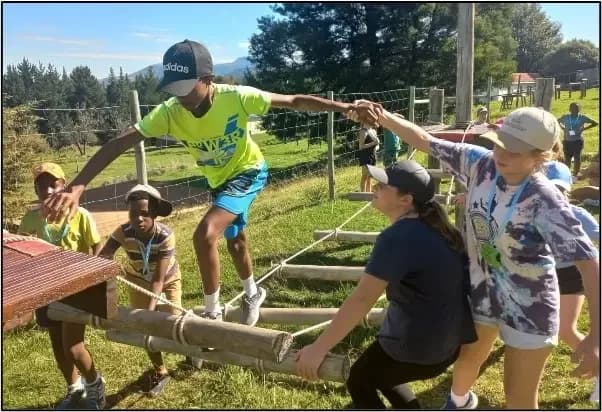
Children and adults working together on an outdoor balancing activity at Hobbiton

Growing up on the mountain

Muddy shoes.
Curious minds.

Here, forests and streams are part of everyday childhood. Frogs, birds and changing seasons turn up outside the classroom as well as inside school books.

With Mud & Moss Montessori School part of village life, a new generation is growing up with nature close at hand, with its own stories still to tell.

Hogsback today

Still growing.
Still becoming.

A garden, a trail, a school, a studio.
Every generation leaves something here.

Hogsback wasn’t carefully planned into existence. It grew from all these lives and landscapes. Spend a little time here and you’ll find a place that’s complicated, welcoming, occasionally muddy, and still making its own story.